Dholera RERA Plotted Development : Buyer Verification Guide
RERA is often associated with apartment projects, but that’s only part of the picture.
The law also covers development of land into plots for sale. That makes RERA relevant to many plotted developments in Dholera, even where no apartment building is involved.
At the same time, not every sale of land automatically becomes a RERA-registered project. A standalone land transaction, a small exempt development and a larger plotted scheme can fall into different categories.
For a buyer, the useful question is therefore not simply:
A better check is to find out whether registration applies, whether the number belongs to the exact project or phase being offered, and whether the information available through GujRERA matches the land and documents shown to you.
A RERA registration is valuable. It just shouldn’t be treated as the only verification a plot buyer needs.
Does RERA Apply to Plots?
Yes.
The Real Estate (Regulation and Development) Act includes development of land into plots for sale within the definition of a real estate project.
It also recognises a person who develops land for the purpose of selling plots as a promoter.
So a project doesn’t need to contain flats, towers or constructed villas before RERA can become relevant.
Where registration is required, the promoter cannot advertise, market, book, sell or offer plots in that real estate project before registration.
This is especially relevant in Dholera, where plotted developments form a significant part of the property market.
There is still an important distinction to keep in mind.
RERA regulates real estate projects. It would be too broad to assume that every individual sale or resale of a piece of land automatically needs project registration.
The nature of the development, its size, the way plots are being marketed, its phase structure and any applicable exemption all matter.
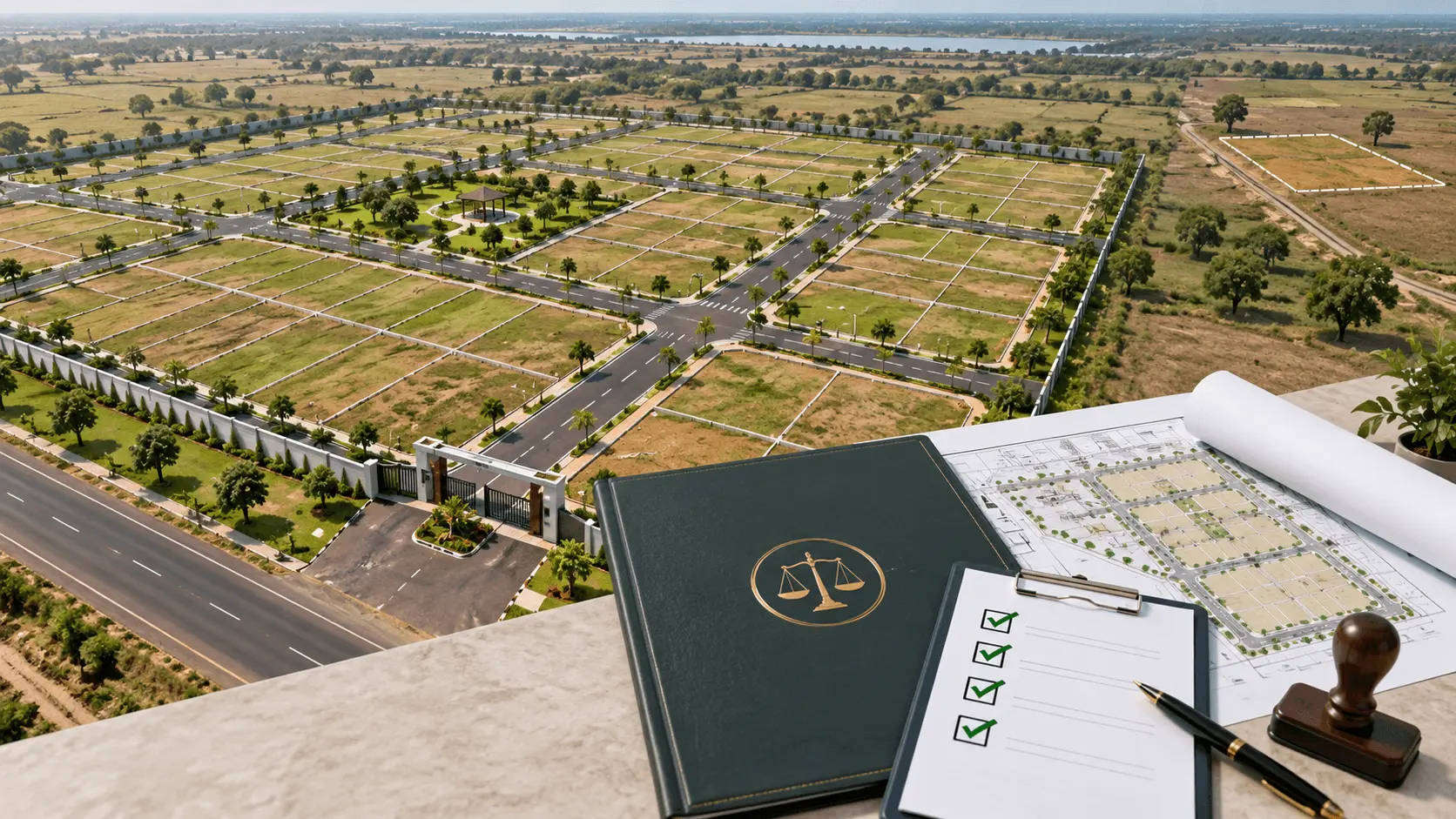
Does Every Plotted Development Need RERA Registration?
No.
The RERA Act provides exemptions from registration.
One of the central exemptions applies where the area of land proposed to be developed does not exceed 500 square metres. The law also separately refers to the eight-apartment threshold.
For plotted development, this makes the total land area proposed to be developed an important part of the check.
There is one qualification buyers should understand. The law gives the appropriate Government the power to reduce the exemption threshold.
Because rules and notifications can change, the current position in Gujarat should be checked when a live transaction is being considered rather than relying on an old article, sales brochure or verbal statement.
Other exemptions can also apply in certain situations, including some projects that had already received a completion certificate before RERA came into force and certain redevelopment work without new marketing or allotment.
The safest way to look at it is simple:
Not every plot sale requires RERA registration, but plotted developments can certainly come under RERA.
Why the Project Phase Matters
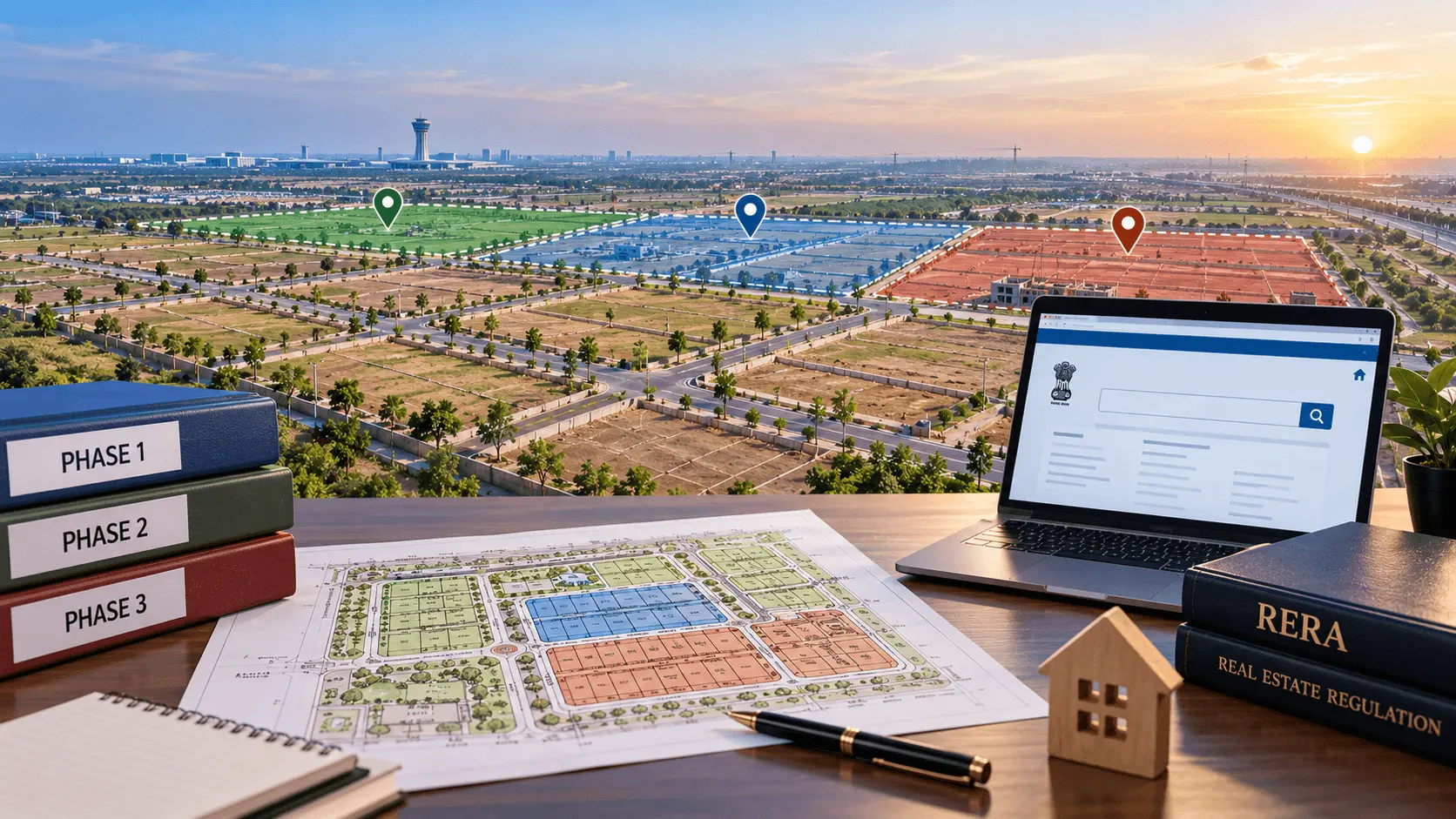
Large developments are often marketed under one common name even though different phases may have separate registrations.
Under RERA, where a project is developed in phases, each phase is treated separately for registration purposes.
That creates a practical issue for buyers.
A promoter may show a genuine RERA number, but the number could belong to another phase of the project.
If you are buying in Phase 3, for example, the relevant question is whether the registration being shown actually covers Phase 3.
This is why a RERA number printed on a brochure should be checked independently rather than accepted at face value.
“RERA Registered” Is More Accurate Than “RERA Approved”
The phrase “RERA approved” is common in property advertising, but “RERA registered” is more precise.
RERA provides a project registration process and issues a registration number.
That registration is important, but it doesn’t mean GujRERA has given one blanket approval covering every legal and planning matter related to the property.
A real estate project can involve several different authorities and permissions.
RERA registration, planning permission, layout approval, development permission and land-related records may all be relevant, but they don’t serve the same purpose.
For buyers, this distinction matters because a project can be properly registered under RERA while still requiring separate checks for title, land use, planning and other property-specific matters.
What Information Does a Promoter Provide for Registration?
RERA registration involves much more than applying for a number.
The promoter has to submit prescribed information and documents relating to the project.
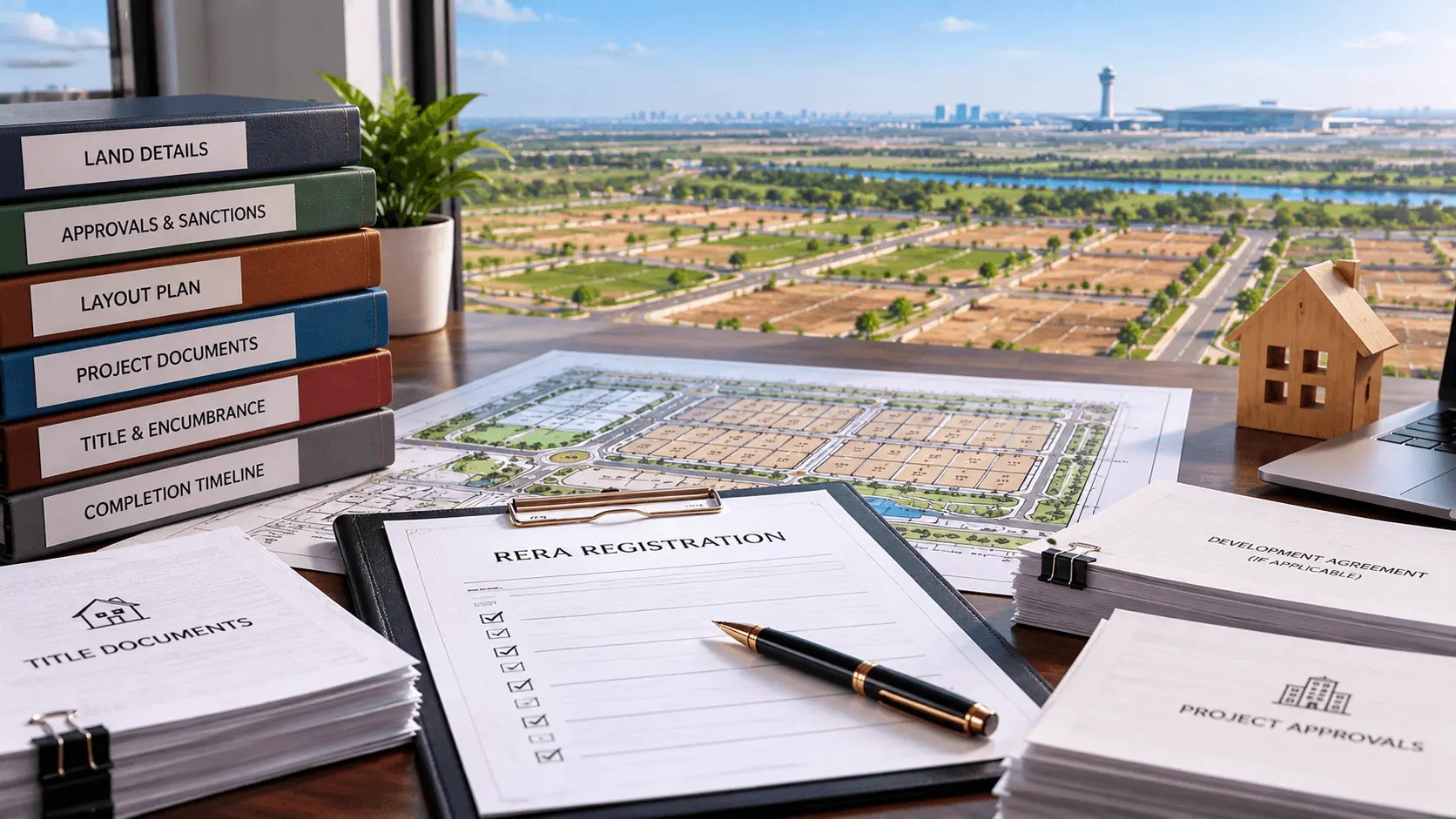
These can include details of the promoter, project land, approvals, sanctioned plans, layout, project location, proposed completion period and transaction documents.
Title and encumbrance information also forms part of the registration framework.
Gujarat’s RERA rules require supporting title-related documents for the project land.
Where the promoter is not the landowner, relevant documents explaining the relationship between the owner and promoter may also be required, such as a development agreement or similar arrangement.
This can be useful for buyers because the company developing or marketing a project is not always the same entity or person that originally owns the land.
The important point is whether the promoter has a properly documented legal right to develop and sell the project.
Does RERA Registration Prove Clear Title?
No.
RERA registration provides useful title-related information, but it is not the same as a complete independent title investigation.
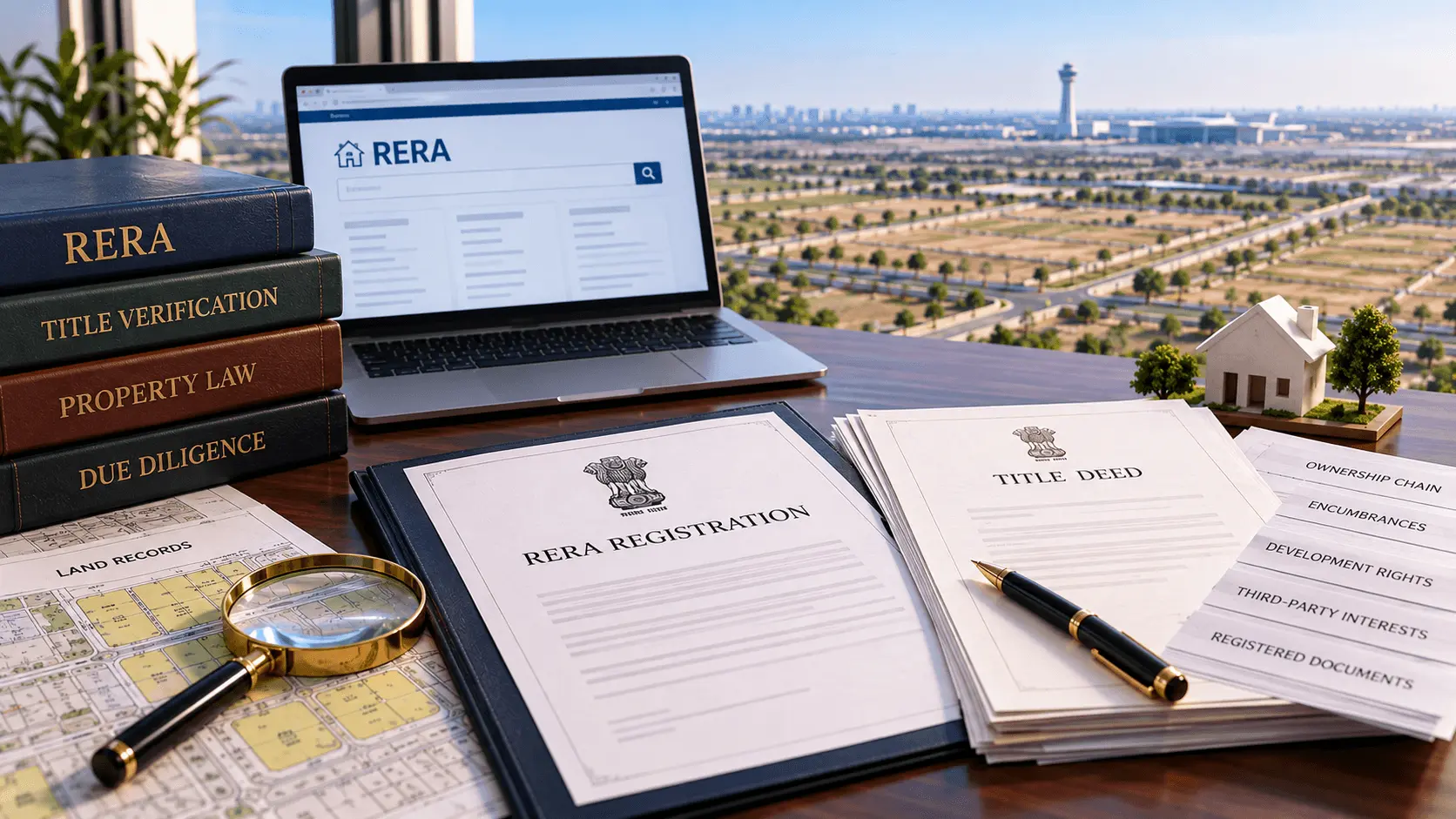
A property lawyer examining title may look at the ownership chain, registered documents, encumbrances, development rights, third-party interests and other records connected with the land.
RERA itself recognises that title defects can occur and provides a remedy where an allottee suffers loss because of defective title.
That is why buyers shouldn’t read a RERA number as a guarantee that every title question has been permanently settled.
The RERA record is an important part of due diligence. It should be read alongside the underlying land and title documents.
What Can a Buyer Check Through GujRERA?
One of the practical benefits of RERA is that registered projects have a regulatory record that buyers can check.
Depending on the project and information available on the portal, this may include details such as:
This is why a screenshot of a certificate should never be the end of the verification process.
The real value of the RERA number is that it allows the buyer to compare what is being marketed with what has actually been recorded for the project.
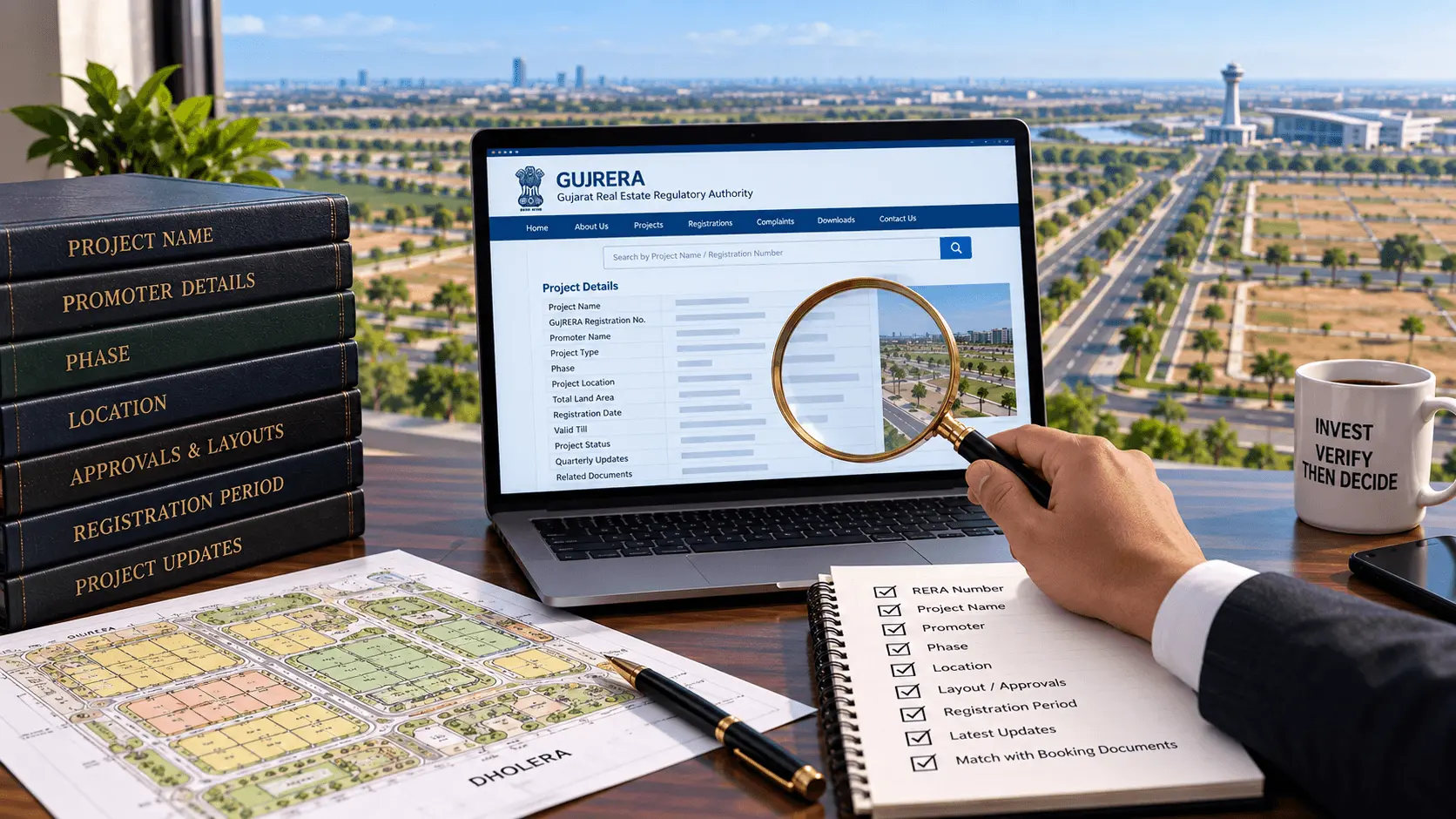
How to Check a Dholera Project on GujRERA
Start by asking for the exact project registration number.
Searching by number is generally more reliable than using only a project name, especially where similar names or multiple phases are involved.
When checking a Dholera RERA plotted development, look at the record as a whole.
First, confirm the project name.
Then check the registered promoter. If another company, broker or person is collecting money or handling the transaction, understand their role and authority.
Next, check the phase.
For a multi-phase project, the plot being offered should fall within the phase connected with the registration being shown.
Compare the project location and available land information with the documents supplied to you.
Where documents such as layouts, approvals or project filings are available, review those as well.
The registration period also deserves attention. An old RERA certificate may have been valid when issued, but a current buyer should look at the latest project position, including extension information where applicable.
Quarterly or periodic project updates can also provide useful context.
Finally, compare the GujRERA record with the booking form, agreement for sale and other documents you are being asked to sign.
If the project name, promoter, phase, land details or another major point doesn’t match, the difference should be explained before a substantial payment is made.
Don’t Rely Only on an Old RERA Certificate
A project registration has a validity period.
RERA also provides a process for extension in certain circumstances and allows registration to be revoked where the legal conditions for doing so are met.
For that reason, a certificate issued several years ago should not be viewed in isolation.
If you are considering a purchase now, the current GujRERA record matters more than an old PDF or printed certificate.
Check whether the registration remains valid and whether any extension or other important update is recorded.
RERA and Dholera Planning Records Are Different Things
This distinction is particularly important in Dholera.
RERA registration and planning approval are connected, but they are not the same check.
A promoter may have to submit sanctioned plans and approvals from the relevant competent authority as part of the RERA process. That does not make GujRERA the planning authority for every matter connected with the land.
Dholera SIR has its own development-planning and Town Planning Scheme framework.
Depending on where the land is located, questions relating to a Town Planning Scheme, plot identity, land use, road position, sanctioned layout or development permission may therefore require verification through the relevant planning records.
Three Checks a Plot Buyer Should Keep Separate
A practical way to understand due diligence is to divide it into three areas.
RERA Check
This tells you whether an applicable project is registered, who the promoter is, which project or phase is covered and what information has been disclosed through the regulatory record.
Planning Check
This deals with matters such as sanctioned layout, development permission, land use, Town Planning Scheme details and other issues handled by the relevant planning or development authority.
Title Check
This deals with ownership, chain of title, development rights, encumbrances, registered interests and the authority of the person or company selling the property.
All three can relate to the same plot, but they answer different questions.
A buyer shouldn’t assume that clearing one automatically clears the others.
What Should Be Checked Beyond RERA?
The exact documents will vary from one property to another, but the overall objective is straightforward: the records should describe the same land and the same transaction.
The person selling or developing the plot should have the legal authority to do so.
The land forming part of the RERA project should match the relevant title and property records.
The plot being offered should correspond with the applicable sanctioned layout.
Planning and development permissions should come from the authority responsible for issuing them.
Any mortgage, charge, encumbrance or third-party interest affecting the property should be understood before purchase.
Government land and registration records may also help with verification.
In Gujarat, official land records, property-card information and document-registration records can form part of the due-diligence process.
But a single record rarely answers everything.
A 7/12 extract, property card, RERA certificate or registration search may be useful evidence without being a complete title opinion on its own.
What If the Developer and Landowner Are Different?
That is not automatically a problem.
Many projects are developed through agreements between a landowner and a developer.
What matters is whether the developer has proper legal authority over the project land.
Where the promoter is not the owner, Gujarat’s RERA framework provides for relevant owner-consent and development-related documentation.
For a buyer, the question to ask is:
What gives this promoter the legal right to develop and sell these plots?
If the promoter and owner are different, that relationship should be properly documented and capable of being verified.
The 10% Advance Rule Buyers Should Know
RERA also regulates how much a promoter can collect before the agreement for sale.
A promoter cannot accept more than 10% of the cost of a plot, apartment or building as an advance or application fee without first entering into a written agreement for sale and registering that agreement as required by law.
This makes payment documentation part of the verification process.
Before paying a substantial amount, a buyer should know:
A RERA number on the brochure doesn’t remove the need to understand these terms.
Marketing Claims Should Match the Project Record
A brochure may look convincing, but important claims should still be compared with the registered and sanctioned project information.
Registered project advertisements are required to carry the RERA registration number and Authority website details.
RERA also addresses false or incorrect statements in project advertisements and prospectuses in situations covered by the law.
From a buyer’s point of view, the practical lesson is simple: keep copies of important marketing material.
Save the brochure, written offer, advertisement and payment communication connected with the transaction.
If what is being marketed doesn’t match the official project information, ask why before moving ahead.
Does RERA Registration Guarantee Timely Completion?
No.
Registration creates obligations and gives buyers regulatory protections, but it cannot make delays impossible.
A promoter declares a proposed completion period during registration, and registered projects are subject to ongoing disclosures.
The law also provides remedies in circumstances where a promoter fails to complete the project or hand over possession as required.
For that reason, the current project status is more useful than simply knowing that registration was granted at some point in the past.
What Rights Does a Plot Buyer Have Under RERA?
For a project covered by RERA, an allottee has statutory rights.
These include access to information relating to sanctioned plans and layouts approved by the competent authority and information about the stage-wise schedule for completion of the project and agreed infrastructure.
The law also contains provisions relating to possession, documents, refund and compensation in applicable cases.
This is why RERA should be seen as more than a registration-number database.
It creates a regulatory framework around the project and the relationship between promoters and buyers.
Frequently Asked Questions
Conclusion
RERA is an important part of checking a plotted development in Dholera, but a registration number should never be treated as the only proof a buyer needs.
The RERA framework can apply to the development of land into plots for sale, and a registered project gives buyers a useful way to verify the promoter, project or phase, registration status and information disclosed through GujRERA. For larger or phase-wise developments, it is especially important to confirm that the registration number being shown actually relates to the phase in which the proposed plot is located.
At the same time,
GujRERA registration and property title are not the same check. A registered project may still require separate verification of ownership, development rights, encumbrances, sanctioned layout, land records and other documents connected with the specific plot.
The same applies to planning matters in Dholera. RERA registration does not replace the records or permissions of the competent planning and development authorities. Where the land falls within Dholera SIR, relevant Development Plan, Town Planning Scheme, plot identification, land-use and development records may also need to be checked separately.
For a buyer, the most useful approach is to make sure the same property can be traced consistently across the GujRERA project record, the relevant planning and land records, the title documents and the agreement being offered for signature.
If the promoter name, project phase, plot details or underlying land records do not match, the difference should be clarified before a major payment is made.
RERA is therefore best treated as an important regulatory checkpoint not as a substitute for the complete verification of the property.
Disclaimer
This article is published by Dholera City Buildconz for general informational and educational purposes only. The information is intended to help readers understand RERA-related checks that may be relevant when considering plotted developments in Dholera.
Dholera City Buildconz is an independent real estate company. It is not a government department, government company, statutory authority or government agency. The company is not part of, owned by, operated by or acting on behalf of DICDL, DSIRDA, GujRERA, NICDC, the Government of Gujarat, the Government of India or any other government authority.
Any reference in this article to GujRERA, DICDL, DSIRDA, Dholera SIR, government departments, laws, rules, planning authorities or official records is made only for informational and verification purposes. Such references should not be interpreted as a partnership, official association, endorsement, appointment or authorisation of Dholera City Buildconz by any government body or authority.
RERA registration should also not be treated as a guarantee of clear title, planning approval, project completion, property-price appreciation or investment returns. Title records, land ownership, development rights, encumbrances, sanctioned plans, applicable planning permissions and the promoter’s authority over a particular property may require separate verification.
Before booking or purchasing a specific plot, buyers should verify the current GujRERA project record, relevant land and planning records, title documents and transaction documents applicable to that property. Where required, buyers should obtain independent legal or professional advice before making a final purchase decision.